Folio 01
Council Budget Folio
One fiscal year, drawn as a bound set of charts that keep the ordinance's own heads, then walked through with the council in a half-day briefing.
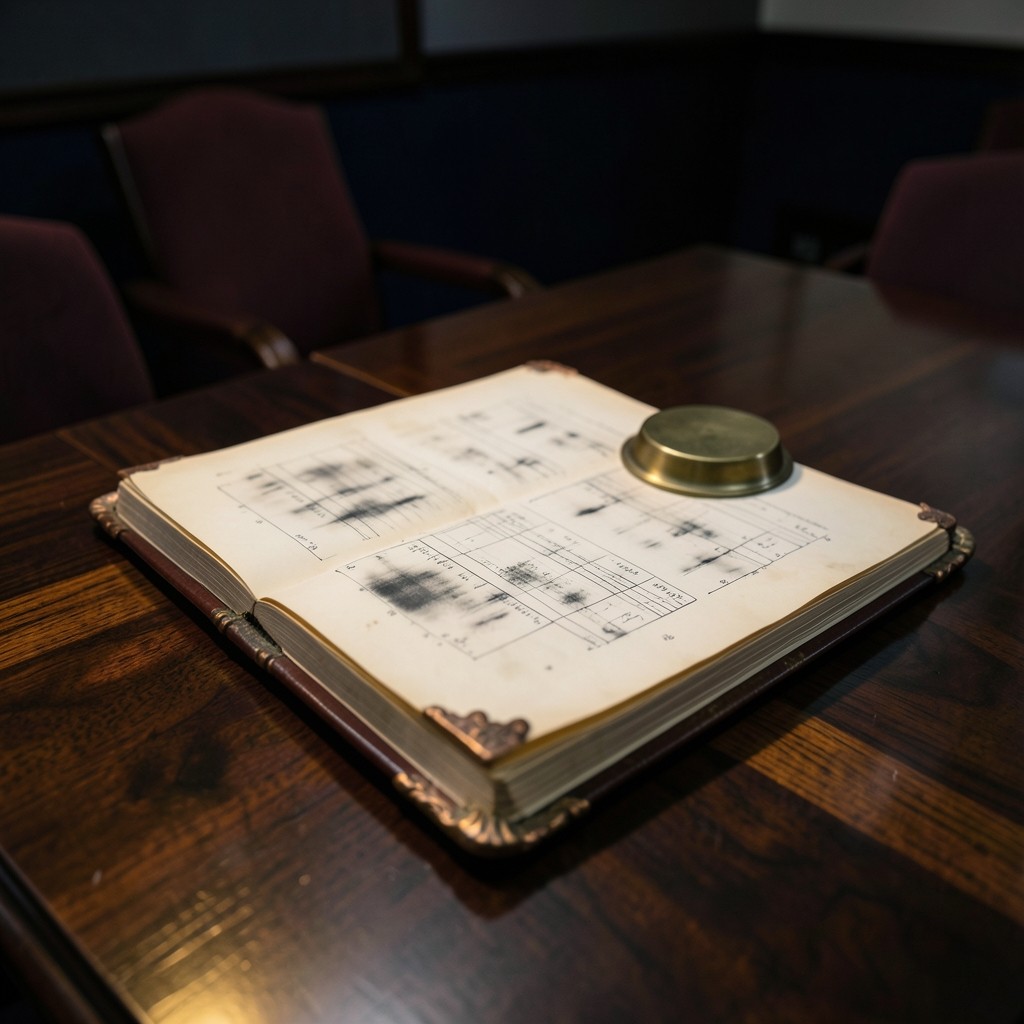
- Form
- Bound chart folio and a half-day briefing
- Time
- Four to six weeks from a complete draft ordinance
- Place
- Reading at the Hathairat Road studio; briefing in the client's chamber or at the studio
- Fee
- Quoted from the number of heads, and from whether capital works are in the book
The Council Budget Folio is the studio’s principal commission. It is for a mayor’s office, a budget clerk, or a council chair who must put an annual budget ordinance in front of members who will not read sixty pages of columns in the week of the vote.
What leaves the studio is a bound folio: ivory sheets, one chart family per expenditure head, project names copied from the draft, and a short gloss in ordinary language set beside the official name and labeled as a gloss. A hearing sheet for the public sitting is tucked in the back. Niran Chaiprasert or Malee Srisuk then spends half a day in the chamber, or at the studio if the council prefers, turning those pages with the members.
The scope is one municipality and one fiscal year. Thai local fiscal years run from 1 October to 30 September. Operating expenditure and the capital appendix are both in the folio when the client wants both. Revenue is drawn as its own short run of sheets, not folded into the spending. A second year is a different commission, the Year Comparison Folio.
Included: reading the draft ordinance and the revenue estimate the clerk sends; charts that use the ordinance’s plan, work, and project names; one round of corrections after the clerk checks the heads; binding; and the half-day briefing. The folio can be prepared with Thai names and an English gloss, or in the language of the source if the chamber works in Thai. We print enough copies for the executive table and a reading copy for the council office. Further copies for every member are quoted with the printer.
Left with the municipality: the legal reading of the ordinance, the auditor’s opinion, the bookkeeping, and the vote itself. We do not sign the ordinance and we do not enter figures into the council’s accounts.
The weeks usually go like this. In the first week we read and list every head we intend to draw, and we send that list before any chart is inked. The clerk marks misses. Draft charts follow. The clerk has a set week to correct a project name, a merged line, or a figure. Then we bind and agree the briefing day, ideally several days before the reading so a split project can still be put back into the draft.
We ask for the draft ordinance, last year’s ordinance, the revenue estimate, and the capital list if it lives in a separate appendix. If a page is missing, that head is left undrawn and marked as undrawn. We do not invent a figure to finish a page.
A town municipality with a familiar shape of personnel, operating, subsidy, and capital lines is the usual book. A provincial administrative organization with a very long capital appendix takes longer and is quoted accordingly. We take one folio at a time in a given fortnight, because the clerk’s correction week is part of the work.
The fee is quoted after we see the draft. On the rates page, recent town-municipality folios sit in a band; the band moves with the number of projects and with travel outside Bangkok. Write with the fiscal year and the likely meeting date.