Public hearings · 2 June 2026
What a ward sheet can hold
A ward meeting can hold about eight lines. The rest of the ordinance belongs back on the clerk's table, not in the legend.
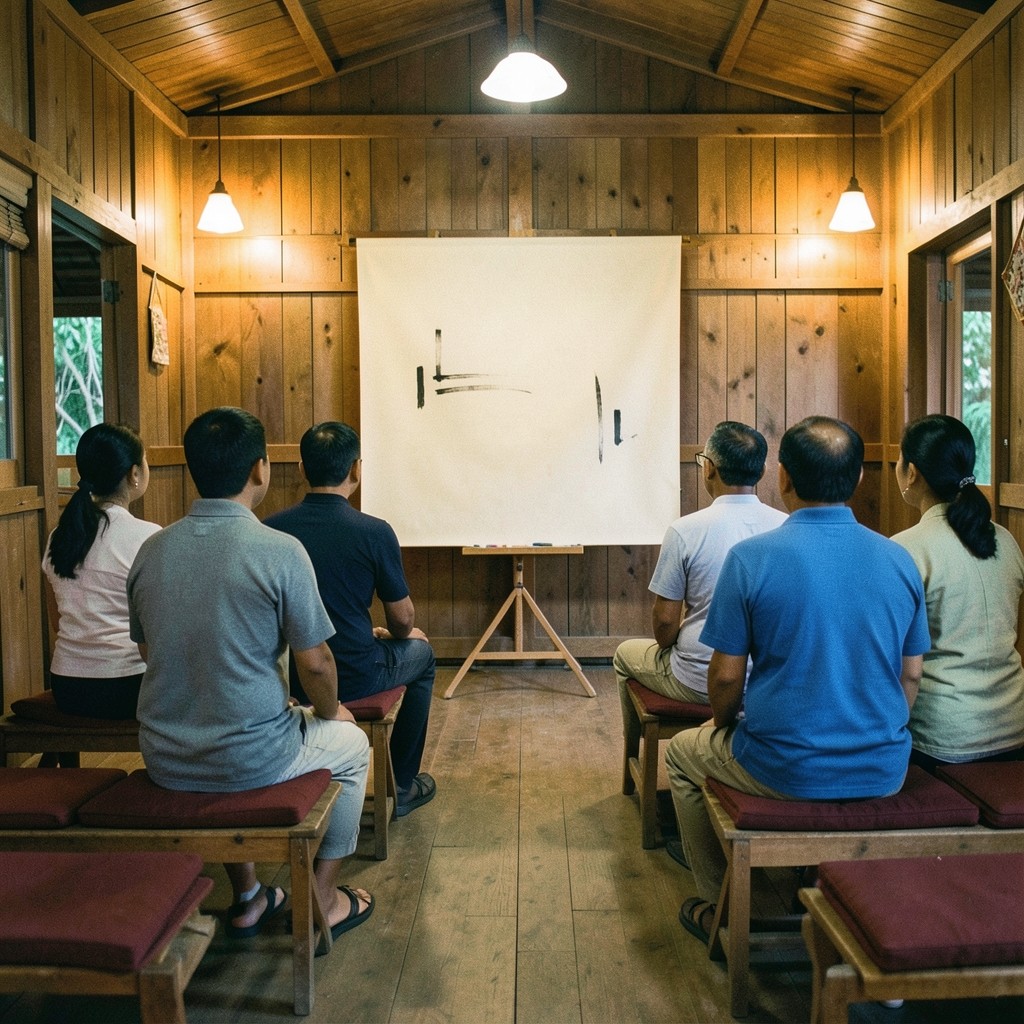
A public hearing on a municipal budget is not a second reading of the full ordinance, and the sheet on the easel should admit that. People have come about the drain on their soi, the subsidy to the school committee, the market fee, the new poles. They have not come to audit the personnel roster line by line, even when that roster is the largest number in the book.
The sheet that works in a community hall in Bangkok, or in a tambon hall two hours away, is large, few, and sourced. Large enough to read from the back row. Few enough that each line can carry its official name. Sourced so the corner of the paper says which draft, and which date, the figures were taken from.
Eight lines is the count we keep returning to. It is not a rule of nature. It is the count at which the type is still a finger’s height and the chair can still point without a legend that is longer than the sheet. A ninth urgent line is a reason to drop a quieter one, or to make a second sheet for a second conversation, not a reason to shrink the type.
Each line needs three things and then it needs to stop. The official head, copied. The baht figure from that draft. One sentence on what the money does this year, labeled as a gloss. Last year’s quarrel, the revenue code in full, and a pie of the entire municipality do not fit, and they pull the room into a debate the chair did not call.
There is a standing temptation to “give context” by showing the ward’s share of a citywide project. Do that only when the ordinance itself assigns a share. If the drain serves three communities and the book does not split the baht, a chart that awards a third to each is a fiction. Say the project serves three communities and show the whole figure. Residents can object to the whole figure. They cannot usefully object to a third that nobody appropriated.
Associations sometimes ask for a sheet when they hold an old photocopy and the council holds a newer draft. We will draw from the document the association holds, and we will date it. We will not silently swap in figures from a later draft the association has not seen. If both documents are on the table, both dates go on the sheet. The difference, if someone wants it drawn, is a comparison, which is a different piece of work.
Related commissions sit on the folios page. If a draft on your desk has this problem in it, write to the studio with the fiscal year.